
Showing posts with label odonation. Show all posts
Showing posts with label odonation. Show all posts
Thursday, May 20, 2010



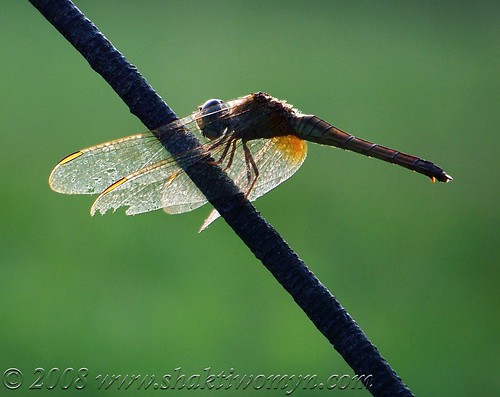
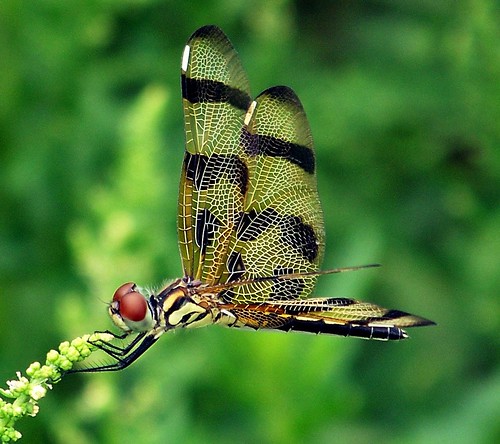
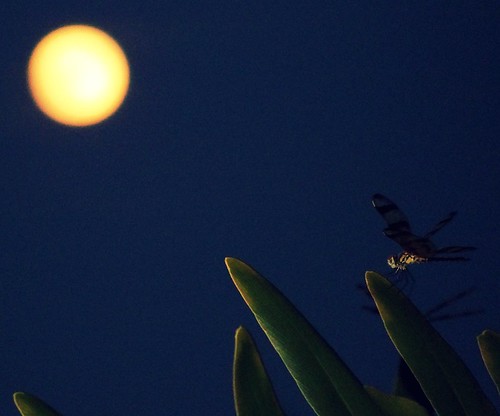
Blue Dragon Rock Star

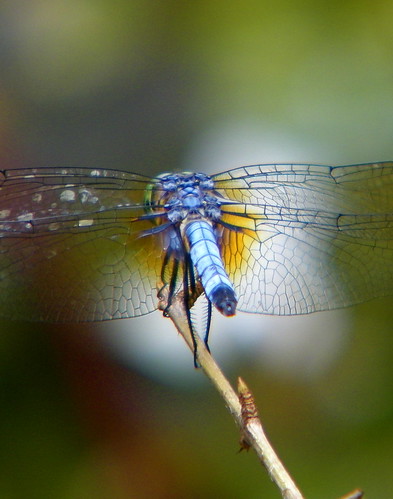
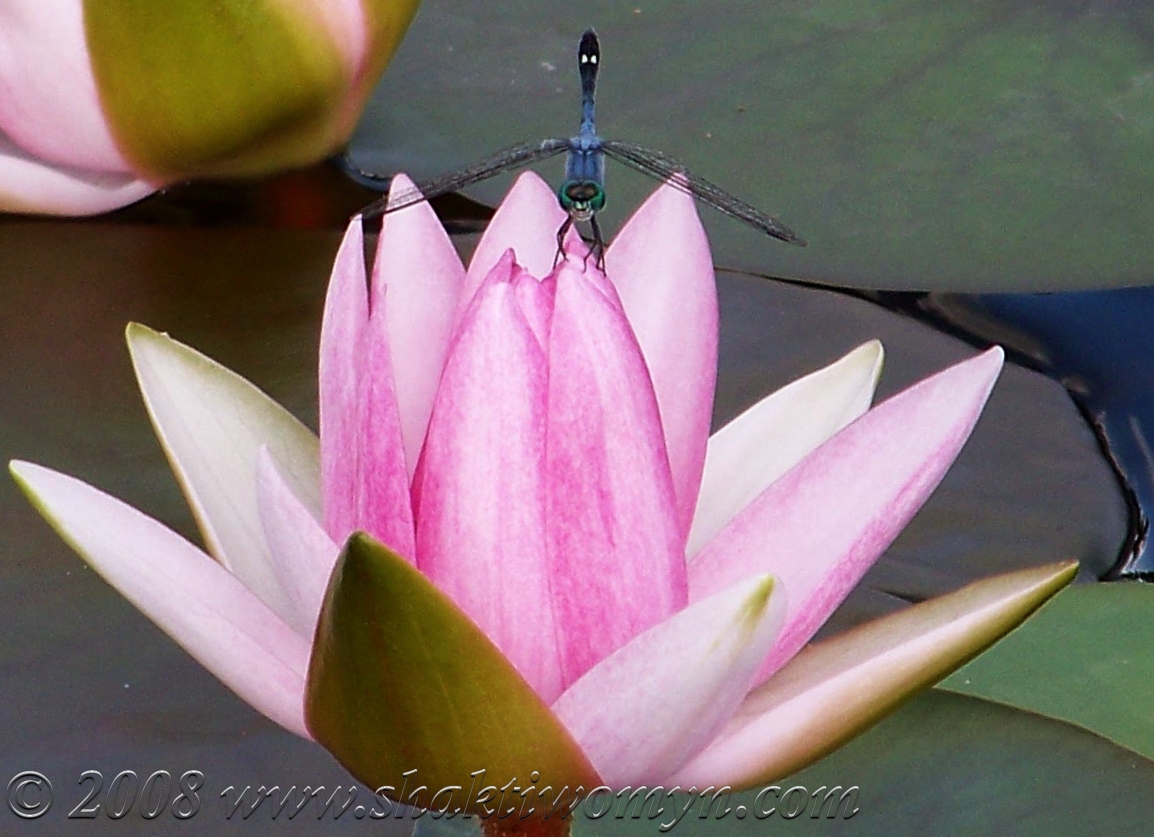
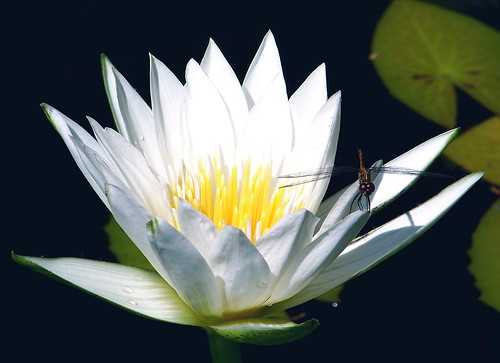
my blue dasher dragonfly rock star - posing beautifully in a palm tree just after he ate. He was about the size of my pinky.
Monday, August 4, 2008
A New Dragonfly & Damselfly
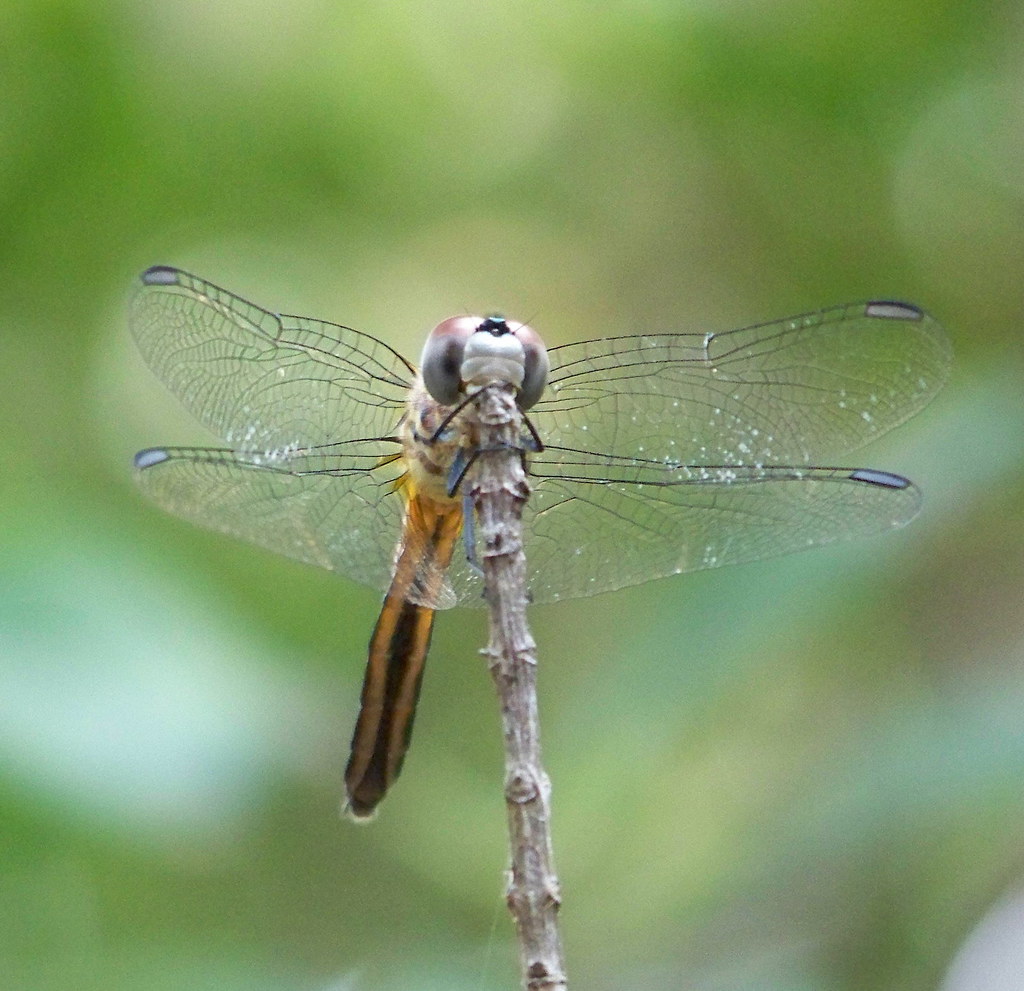
My 10 yr old nephew accompanied me on my afternoon walk today and thanks to his very young eagle eyes, I managed to get pics of a new dragonfly and my first damselfly! I am quite excited and yes, life is such that this is great excitement :) and totally fun! Whether my fertile imagination or not, even my nephew commented that they do not get all excited and fly away so much anymore when I am around - possibly because I have been tromping through every day....who knows? This evening is set aside to do a bit of research and see if I can discover the names - the amber and brown striped wings are Halloween Pennant Dragonflies as I discovered and Baker Watson was kind to confirm. It was another windy day here which means at least 60% of the pics come out blurred but I was pleased with those that came out! YAY!


Saturday, August 2, 2008
Storms and Dragons
I was chased indoors by the incoming storm - I figured a field is not a good place to be when a storm approaches :) - but I managed to get 2 NEW dragonflies before I came in! The green one was very patient and sat right there while I fiddled and snapped but there was lots of activity along the canal so it was just quick! I will go check later after the weather clears....


Friday, August 1, 2008
Lifespan of a Dragonfly
I was looking at this picture of one of the dragonflies that I took a picture of:
 and his wings seem a bit worse for wear and it was mentioned that the lifespan of a dragonfly is only 14 days so I found this:
"The lifespan of a dragonfly comprises of two-stages. After breeding the female dragonfly will deposit her eggs under or onto aquatic vegetation. Once the eggs have hatched the first stage in the lifestyle of a dragonfly can begin. This stage of a dragonfly's lifestyle is as an aquatic larvae, or 'nymph'. This stage will generally last between one and three years, during which time the larvae will act as a voracious predator of other insect larvae, tadpole and even small fish. Most other insect species, including moths and butterflies, go through a pupal stage before emerging as adults, however, dragonflies do not pupate. Instead the larval form will emerge from its aquatic environment and hang from the bank or a stem. From this position it will and bask in the warmth of the sunlight and undergo metamorphosis into its adult form. Once the larva's transformation is complete, the newly emerged adult will have to wait several hours before its wings dry out and become firm enough to fly. This is a critical time in the life cycle of the dragonfly as it is exposed to predation, which may even come from dragonfly larvae themselves. However, once the adult is able to fly it becomes once more a voracious predator, displaying its wonderful metallic armor. As an adult, its quarry will be flying insects and some of the larger dragonfly species may even predate its cousin the damsel fly.
Life as an adult sadly is a glorious burst, just long enough to reproduce. The adult dragonfly will not live beyond several months, depending on the quality of the weather. Generally speaking, if the weather is dry and warm then the adult may live as long as six months. However, in the short, and sometimes not so sweet summer of the British Isles, adults will tend not to live for longer than several weeks. If your eyes are keenly tuned to the air above rivers, lakes and ponds, you may just be fortunate enough to see a beautiful dragonfly dancing and darting, it is a truly marvelous sight indeed."
I am going to poke around some more about the loss of the wings - maybe another insect took a bite...anyways just for informational purposes...

"The lifespan of a dragonfly comprises of two-stages. After breeding the female dragonfly will deposit her eggs under or onto aquatic vegetation. Once the eggs have hatched the first stage in the lifestyle of a dragonfly can begin. This stage of a dragonfly's lifestyle is as an aquatic larvae, or 'nymph'. This stage will generally last between one and three years, during which time the larvae will act as a voracious predator of other insect larvae, tadpole and even small fish. Most other insect species, including moths and butterflies, go through a pupal stage before emerging as adults, however, dragonflies do not pupate. Instead the larval form will emerge from its aquatic environment and hang from the bank or a stem. From this position it will and bask in the warmth of the sunlight and undergo metamorphosis into its adult form. Once the larva's transformation is complete, the newly emerged adult will have to wait several hours before its wings dry out and become firm enough to fly. This is a critical time in the life cycle of the dragonfly as it is exposed to predation, which may even come from dragonfly larvae themselves. However, once the adult is able to fly it becomes once more a voracious predator, displaying its wonderful metallic armor. As an adult, its quarry will be flying insects and some of the larger dragonfly species may even predate its cousin the damsel fly.
Life as an adult sadly is a glorious burst, just long enough to reproduce. The adult dragonfly will not live beyond several months, depending on the quality of the weather. Generally speaking, if the weather is dry and warm then the adult may live as long as six months. However, in the short, and sometimes not so sweet summer of the British Isles, adults will tend not to live for longer than several weeks. If your eyes are keenly tuned to the air above rivers, lakes and ponds, you may just be fortunate enough to see a beautiful dragonfly dancing and darting, it is a truly marvelous sight indeed."
I am going to poke around some more about the loss of the wings - maybe another insect took a bite...anyways just for informational purposes...
Sunday, July 20, 2008
Good Morning from the Dragonfly Stalker
It has been a busy morning - another insomnia night so I just stayed up and then headed out at about 5:30am for the beach to get the sunrise. And it was beautiful! And I have pictures. BUT the pictures are stuck on my camera - sigh - and hte cable is floating around here somewhere....I think. Normally, I use a memory card but I forgot to take it out of the card reader and got there - ah well - LOL - brains go mushy with no sleep. SO...I got back and walked around back of the house to at least take some pics of the cool clouds and much to my surprise - the dragonflies were there! Not quite as many as in the evening but still alot! So here are my early morning bug stalking pictures and I even got another kind - I think it is a butterfly but I will have to toss that to the voxpert - PAT!!! I was also joined by another stalker...slinking through the grass and getting ready to pounce and then he saw me and took off - it was a little wild kitty! These are all single shots as they were more spread out and they seem to be a bit more frenetic in the morning. I came away with about 50 blurred pictures! HAPPY SUNDAY!


Wednesday, July 16, 2008
Tea Time with the Dragonflies
Behind my house is a golf course that is no longer in use so during my evening walk, imagine my delight as I tromped through the field and came upon the dragonflies at tea time! I sat down so as not to disturb and managed to get the little guys sipping on the grass...
 Dragonfly eggs are laid within their territory near the water. Once hatched, these nymphs will live nearly two years on the bottom of streams and ponds. As they reach adulthood an amazing thing occurs, they transform into dragonflies and ascend to the air. In the air, they travel with wings that sparkle with spectacular colors by reflecting and refracting light and other colors. No insect or bird can maneuver as well as a dragonfly. Flying up to 30 mph, they will twist, turn, move up and down, fly backwards, even change directions instantaneously and still will spot movement 40 feet away.
 The power of Dragonfly lies in its ability to see around things by looking from different angles. Using its ability to transform colors and lights by reflecting and refracting them, Dragonfly shows us that life, like light, can bend, shift, and adapt in various ways, making life's appearance never be what it appears to be. Dragonfly's magic shows us to see through life's illusions and find our true vision. It calls us to transform within our lives and reminds us to feel deeply so we will have the compassion necessary to help ourselves and others.


Thanks to Fusion Anomaly for all the dragonfly info!
- Dragonflies, or damselflies, were connected to Freya the Norse goddess of love, fertility and warfare. Freya was famous for her beauty and her knowledge as a magician. It was she who taught Odin the shamanic practices known as seidr which were still practiced during Christian times. The paired bodies of mating dragonflies form the shape of a heart, perhaps being the source for that modern symbol of love. In ancient lore, the dragonfly represents transformation, adaptation and insight.
- European Dragonfly Folklore, In most cultures dragonflies have been objects of superstition. European folklore is no exception. Many old myths have been lost during the history, but fragments of these old myths are still living in old local names for dragonflies. Only in Germany dragonflies have had over 150 different names. Some of these are Teufelsnadel ("Devil's needle"), Wasserhexe ("Water witch"), Hollenross ("Goddess' horse"), Teufelspferd ("Devil's horse") and Schlangentöter ("Snake killer"). Also the name Snake Doctor has been used in Germany. In England the name Devil's darning needle and Horse stinger have been used. In Denmark the dragonfly have got such different names as Fandens ridehest ("Devil's riding horse") and Guldsmed ("Goldsmith"). Different names of dragonflies referring to them as the devils tools have also occurred in many other European cultures, some examples are the Spanish Caballito del Diablo ("Devil's horse") and the French l'aiguille du diable ("Devil's needle"). The Swedish name for dragonfly is trollslända, which means "hobgoblin fly" in English. Long time ago people in Sweden believed that hobgoblins, elves, brownies and such creatures lived in our great woods. In that folklore the dragonflies was considered to be the hobgoblins twisting tools. During the history the dragonflies even have been connected with love and female, the names damselfly (England), Demoiselle (France) and Jungfer (Germany) are some examples of those nice associations.
- An old Swedish name for dragonfly is Blindsticka ("Blind stinger"), this name comes from the opinion that a dragonfly could pick out your eyes. Other people thought that the dragonfly could sew together your eyelids. The same name appears as well in Norway ("Öyenstikker") as in Germany ("Augenstecher").
- An other old Swedish name is Skams besman ("Devil's steelyard"), this name probably depends on the dragonfly's body shape that, with some imagination looks like the weighting tool. In the folklore this was interpreted as that the Devil used the dragonfly to weight the people's souls. When a dragonfly flew around your head, your soul was weighted and you should expect seriously injury as punishment. It is very interesting that, despite of those ideas that the dragonfly should be the Devil's tool, the dragonfly have been a holy animal in Scandinavia. In the Æsir cult the dragonfly was thought to be the love goddess Freya's symbol.
- Some of the Latin names of dragonfly families have interesting meanings: The name Libellula might have been derived from the word libella ("booklet") referring to the resting dragonfly, which wings, with some imagination, looks quite like the pages of an open book. The name Odonata was created by Fabricius in 1793 as name for the whole dragonfly order, means "toothed".
- In some countries, e.g. Indonesia, many African and South American countries both the adult and larva dragonflies are caught to be eaten fried or in soup. In China and Japan the dragonflies has been treated as holy animals, and believed to have medical qualities. Even today the dragonfly Sympetrum frequens is used as fever reducing drug. All over the world dragonflies have been used in different forms of art, stamps and more.
Thanks to Fusion Anomaly for all the dragonfly info!
Subscribe to:
Comments (Atom)
